Map design is a crucial element in game development as it plays a significant role in enhancing the gameplay experience. A well-designed map can help players navigate the game world and create a sense of immersion. A good map should provide a balance between open spaces and obstacles to promote exploration while maintaining a level of challenge. It should also incorporate elements that complement the game’s theme and storyline, such as unique landscapes, architecture, and environmental hazards. Additionally, a map should consider the player’s movement mechanics and abilities, ensuring that it is tailored to the game’s mechanics. Map design is an intricate process that requires a blend of creativity, technical expertise, and player-centric thinking.
I have tried to create maps from two nonexistent worlds.
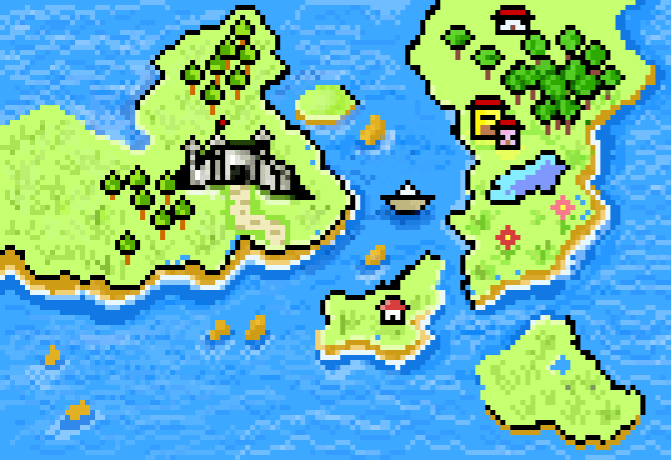
The pixel-map above was drawn via Aseprite. It is set in a vast and sprawling world, with different regions and biomes that players can explore. From the towering mountains in the north to the vast islands in the south, it provides a diverse range of environments that are ripe for exploration. Players will need to navigate through dense forests, treacherous swamps, and winding rivers as they traverse the game world.
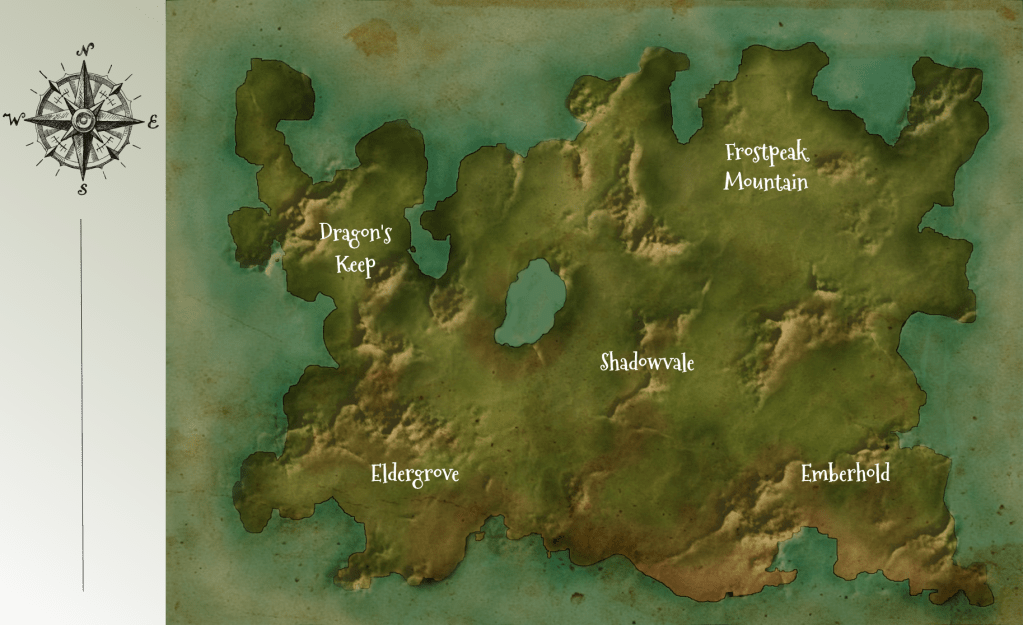
I have created this map via Photoshop and add other elements through Figma. It’s for a mediavel-style adventure game.
 Sena Dökmeci